
Finding the best synthetic urine isn’t just about passing a test. It’s about keeping your job, protecting your paycheck, and saving your sanity.
The sudden panic of a surprise screening is enough to make anyone’s stomach drop. It feels incredibly unfair: THC stubbornly sticks to your system for weeks, while other substances clear out in just a few days.
To help you survive this high-stakes stress, we did the dirty work for you. We didn’t just rely on sketchy forum rumors. We took the most popular brands to a real clinical lab and ran them through professional-grade analyzers. We tested for pH levels, specific gravity, and advanced chemical markers to see which formulas actually fool modern lab machines – and which ones will get you flagged instantly.
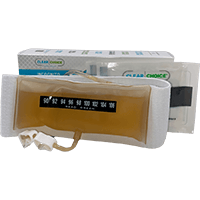
- All you need to pass your test in one kit.
- It will pass specimen validity tests.
- Labs cannot tell that it’s synthetic.
- Invisible under clothes.
- Maintains perfect temperature.
Here is how to walk into your test with 100% confidence.
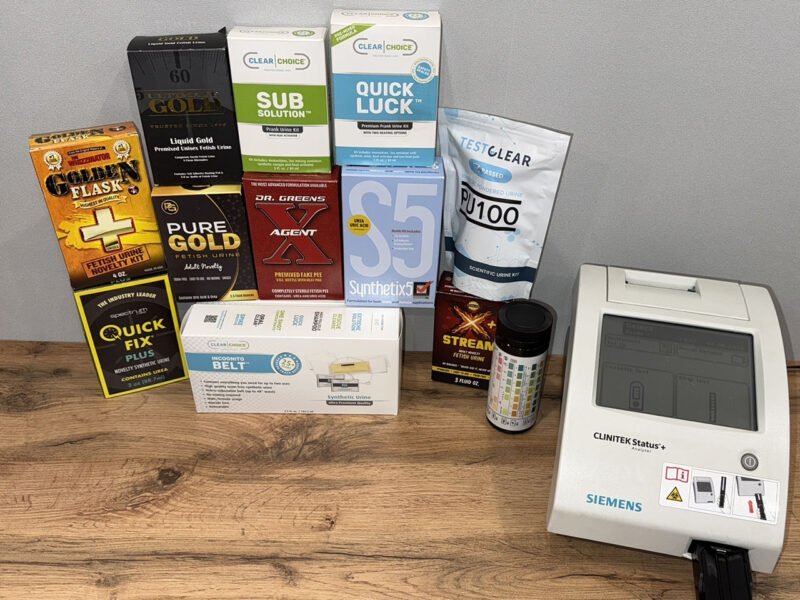
How We Tested
To ensure reliable and accurate results, we used the CLINITEK Status Plus Analyzer, a professional-grade diagnostic device commonly employed in both clinical laboratory settings and point-of-care testing environments.
This device is part of the highly trusted CLINITEK line, which is considered the most widely used urinalysis brand globally.
The CLINITEK Status Plus is frequently utilized in clinics, outpatient centers, and other decentralized healthcare environments across the United States. It is approved for CLIA-waived testing, meaning it meets specific federal guidelines for safe and accurate lab testing outside of traditional lab settings.
By using this industry-standard analyzer, we aimed to replicate the same conditions under which a sample would typically be tested in real-world scenarios.
We used Multistix 10 SG professional-grade test strips to analyze each synthetic urine sample. These are industry-standard reagent strips commonly used in clinical labs to evaluate urine composition.
Each strip is capable of detecting 10 key parameters that provide insight into whether a sample mimics the biological and chemical characteristics of real human urine.
Parameters Tested with Multistix 10 SG
Here are the ten parameters evaluated, along with their normal ranges in healthy human urine:
| Parameter | Normal Range |
|---|---|
| Glucose | Negative |
| Bilirubin | Negative |
| Ketones | Negative |
| Specific Gravity | 1.005 – 1.030 |
| Blood | Negative |
| pH | 4.5 – 8.0 |
| Protein | Negative or Trace (<30 mg/dL) |
| Urobilinogen | 0.2 – 1.0 mg/dL |
| Nitrite | Negative |
| Leukocytes | Negative |
These markers are critical in distinguishing between natural and synthetic urine. While most synthetic urine brands can imitate basic chemical components, replicating the subtle organic markers and natural variability found in real human urine is significantly more difficult.
How These Parameters Help Detect Synthetic or Adulterated Urine
- Biological Inconsistencies: Human urine naturally varies from person to person. Uniform test results—such as consistent pH levels, fixed specific gravity, or total absence of organic markers—can raise suspicion.
- Missing Organic Markers: Certain elements like urobilinogen, leukocytes, and nitrite are challenging to duplicate accurately. Their absence is a common red flag.
- Improper Specific Gravity or pH: Many synthetic samples fall outside the normal range or show unnatural consistency, especially if diluted or modified with masking agents.
- Absence of Trace Elements: While normal urine should test negative for most of these parameters, small, natural variations or trace amounts of substances like blood, protein, or ketones are not uncommon in real samples.
It’s important to note that we did not test for the presence of drugs, as all synthetic urines are drug-free by default. Our focus was solely on whether these products could pass as real urine under standard laboratory analysis.
Now, let’s move on to the test results and reviews of each synthetic urine product we evaluated.
Best Fake Urine Reviews
Incognito Belt
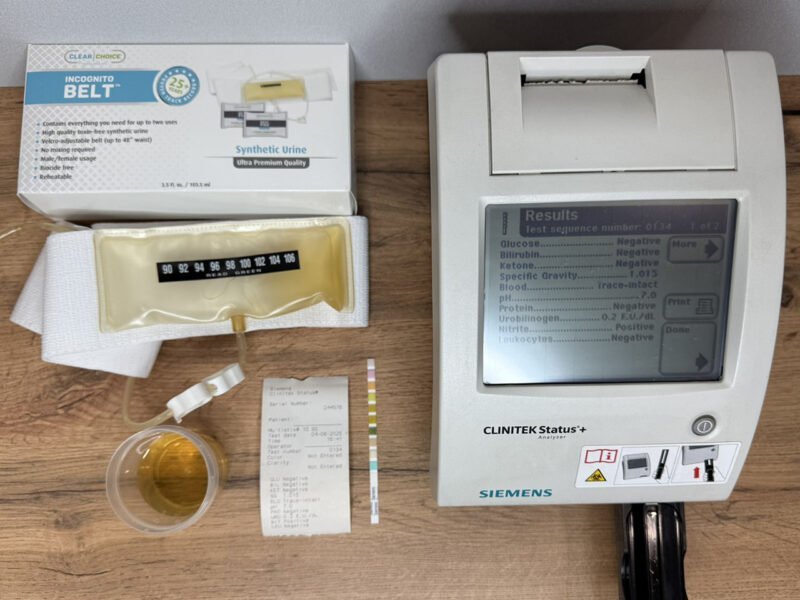
The Incognito Belt is one of the most popular and widely used synthetic urine kits on the market. It’s an all-in-one solution designed not only to provide high-quality fake urine but also to make the delivery process discreet and simple.
Here’s what’s included in the kit:
- A bladder bag that can be comfortably concealed on the body
- A reliable heating pad that maintains urine temperature within the required range
- Strategic placement of the bladder bag near the body to help warm the urine quickly
- A delivery tube with two clips that makes use quick and hassle-free, even in a testing environment
- Enough synthetic urine for two uses
Thanks to this practical design, the Incognito Belt is a convenient and dependable choice for anyone needing a complete synthetic urine system. However, the real question is whether the urine itself is good enough to pass laboratory scrutiny.
Lab Test Results
When tested using the CLINITEK Status Plus Analyzer and Multistix® 10 SG strips, the urine sample from the Incognito Belt performed exceptionally well. All parameters fell within the normal range expected for real human urine.
| Analyte | Result |
|---|---|
| Glucose | Negative |
| Bilirubin | Negative |
| Ketone | Negative |
| Specific Gravity | 1.013 |
| Blood | Trace-intact |
| pH | 7.0 |
| Protein | Negative |
| Urobilinogen | 0.2 EU/dL |
| Nitrite | Positive |
| Leukocytes | Negative |
Notably, the sample even contained trace amounts of nitrites, which is a rare feature in synthetic products and often associated with naturally occurring urine.
This level of detail significantly enhances the believability of the sample and helps it pass lab validity testing. Based on our analysis, the synthetic urine provided with the Incognito Belt is high-quality and difficult to distinguish from real urine, making it a top performer in our review.
GET YOUR INCOGNITO BELTQuick Luck
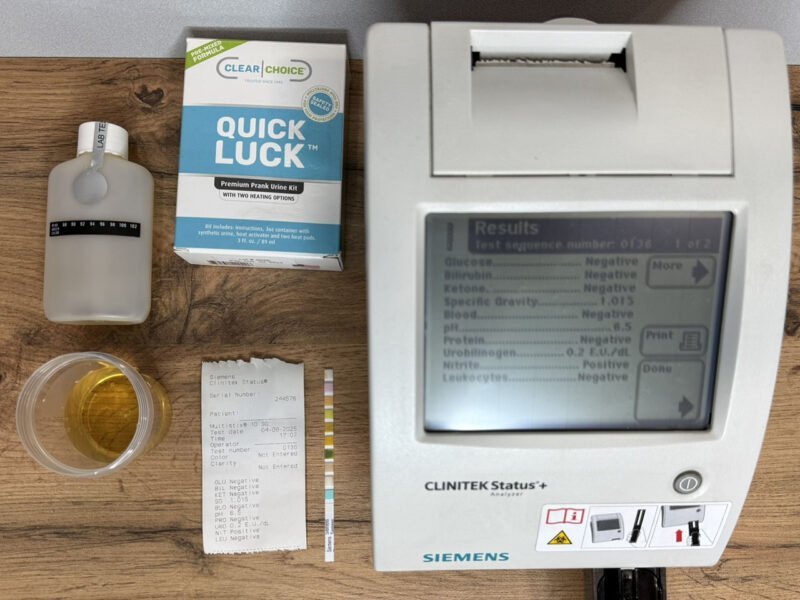
Quick Luck by ClearChoice is another high-quality synthetic urine product that offers both excellent formulation and practical usability. It is premixed and ready to use, making it ideal for situations that require fast preparation.
Key features include:
- Pre-mixed urine, no preparation needed
- Enough urine for two uses
- Comes with two premium heating pads that are both reliable and consistent
- Includes a flip-up spout cap for easy dispensing during a test
Lab Test Results
Quick Luck scored exceptionally well in our testing. All 10 parameters fell within the normal human urine range, including trace amounts of nitrites, which is a strong indicator of biological authenticity.
| Analyte | Result |
|---|---|
| Specific Gravity | 1.013 |
| pH | 6.5 |
| Urobilinogen | 0.2 E.U./dL |
This makes the sample appear more natural and significantly increases its chances of passing even detailed lab validity testing.
With its strong lab performance, user-friendly design, and high-end accessories, Quick Luck stands out as one of the most dependable synthetic urine options currently available.
GET YOUR QUICK LUCK URINESub Solution
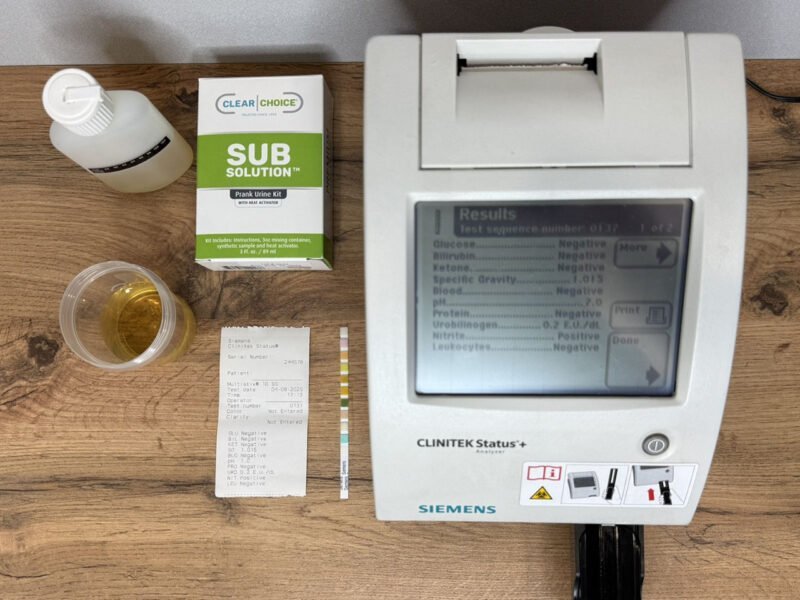
Sub Solution is a powdered synthetic urine product designed for users who prioritize shelf life, dosing control, and portability. Unlike pre-mixed options, it allows for partial use, making it a practical choice for those who may need multiple samples over time.
Key features include:
- Powdered urine formula with long shelf life
- Partial mixing capability – saves unused powder for future use
- Measurement markings on the mixing vial for precise dosing
- Temperature strip on the bottle for easy monitoring
- Flip-up spout cap for quick and spill-free pouring
- Spill-proof bottle design, safe to carry discreetly under clothing
Despite its strong formulation, Sub Solution comes with a few usability drawbacks:
- The only heating method is a heat activator powder, which can be risky under time pressure
- Risk of overheating the sample, potentially compromising its viability
- Requires hiding both the bottle and powder, which can be challenging in high-security situations
- Needs 5–10 minutes of preparation time
- Must be mixed with clean bottled water—tap water may affect the chemical balance
- Lacks an integrated concealment solution, making it less beginner-friendly
- Additional gear, such as a stash belt, is often needed to use discreetly
Lab Test Results
Sub Solution performed well in lab analysis. All 10 parameters were within normal human urine ranges, with trace amounts of nitrites present—an important marker that supports authenticity. The pH and specific gravity values were both within the mid-normal range, though pH was slightly closer to the upper limit, which still falls within acceptable thresholds.
| Analyte | Result |
|---|---|
| Specific Gravity | 1.013 |
| pH | 7.0 |
| Urobilinogen | 0.2 E.U./dL |
Overall, Sub Solution is a strong option for experienced users comfortable with pre-mixing and handling additional components. Its formula is high-quality, but the preparation process may not be ideal for situations where speed and discretion are critical.
GET YOUR SUB SOLUTION URINEQuick Fix
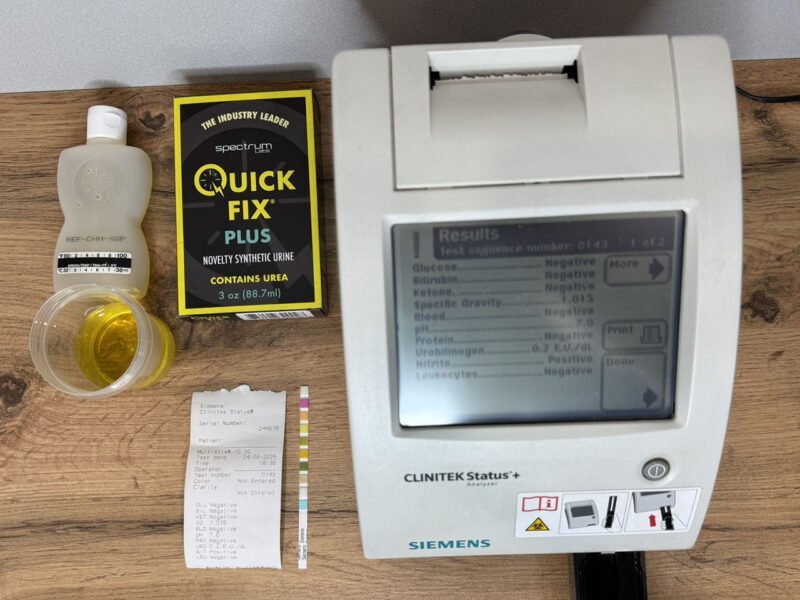
Quick Fix is a widely available and affordable synthetic urine product aimed at users who need a straightforward, no-frills solution. It comes pre-mixed and is designed for ease of use, though it has some limitations in terms of concealment and heating reliability.
Key features include:
- Flip-up spout cap pre-attached for quick dispensing
- Enough urine for two uses, making it cost-effective
- Budget-friendly price
- Two-year shelf life for long-term storage
- Flat bottle shape helps secure heating pad in place
- Realistic urine color for visual authenticity
- Reusable bottle – can be reheated if unused
However, some drawbacks should be considered:
- No built-in concealment method, which can make it difficult for inexperienced users
- The included regular heat pad may overheat the urine or cause burns when worn close to the skin
- No adhesive on the heat pad – requires rubber bands, which may fail
- Only one heating pad is included, limiting the ability to use both portions effectively
- The temperature strip is unreliable – during testing, it gave inconsistent readings compared to a digital thermometer
Lab Test Results
Despite its basic design, Quick Fix delivered strong performance in lab testing. All tested parameters were within the normal range, and trace nitrites were present, which is a key marker found in natural urine.
These results suggest that the sample is chemically sound and could pass standard laboratory validity testing.
| Analyte | Result |
|---|---|
| Specific Gravity | 1.015 |
| pH | 7.0 |
| Urobilinogen | 0.2 E.U./dL |
Quick Fix is best suited for users on a budget who need a simple, pre-mixed solution. While it lacks advanced features and reliable temperature control, its urine formula itself meets the necessary criteria for believability in a lab setting.
TestClear
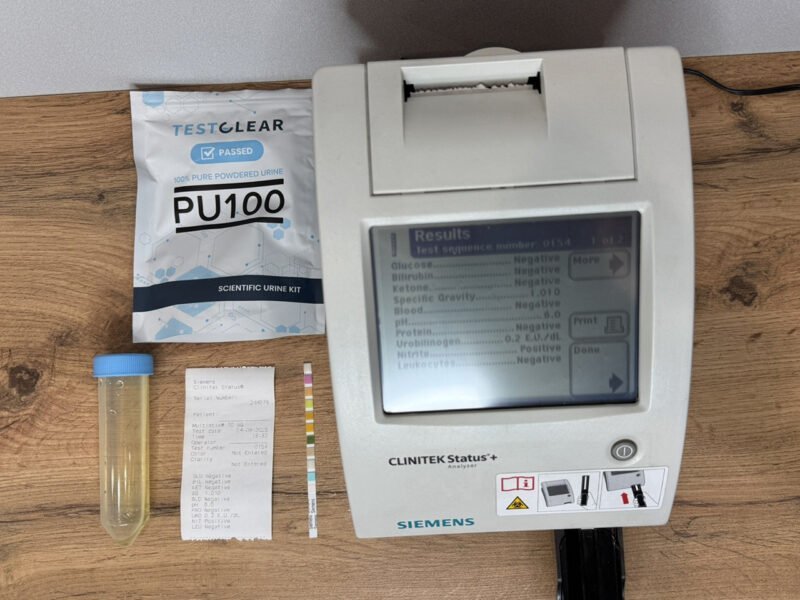
TestClear is a powdered synthetic urine kit known for its long shelf life, flexible usage, and compatibility with both male and female users. It’s designed to meet the requirements of various testing standards.
Key features include:
- Powdered urine – extended shelf life and easy storage
- Unisex formulation – suitable for all users
- Flexible usage – enough powder for up to two tests.
- Includes a temperature strip to monitor the urine temperature before submission
- Comes with adhesive-backed toe warmers that can maintain warmth for up to 8 hours
- Toe warmers stick easily to the bottle for hands-free heating
However, there are several usability drawbacks:
- Only one full use per kit, making it more expensive per use compared to other options
- The powdered format requires preparation time (5–10 minutes) and clean bottled water
- The round bottle shape is more difficult to conceal in stash belts than flat designs
- Comes with a screw-on cap, which is less convenient under pressure than flip-top alternatives
- Toe warmers can overheat the sample, risking temperatures above 100°F and potential test failure
- Warmers take time to activate, often requiring up to 30 minutes before they’re effective
- The temperature strip is not pre-attached, despite what some product images suggest
- No built-in concealment accessories are included – users must find their own solution for discreet transport
Lab Test Results
When analyzed using professional lab equipment, all 10 urinalysis parameters fell within normal human ranges, indicating that the chemical formulation of the sample is accurate and well-crafted. As with some of the top performers, trace amounts of nitrites were present—an important biological marker that adds to the sample’s authenticity.
One minor observation: the urine color appeared slightly pale, though this was likely due to excessive dilution when mixing with water. When prepared properly, the color should more closely match that of natural urine.
| Analyte | Result |
|---|---|
| Specific Gravity | 1.010 |
| pH | 6.0 |
| Urobilinogen | 0.2 E.U./dL |
TestClear delivers high-quality urine chemistry, but its powdered format and lack of integrated concealment features may make it less suitable for users who need a quick, discreet, and beginner-friendly solution. It’s best suited for those who are comfortable with preparation and already have a reliable concealment method.
GET YOUR TEST CLEAR POWDERED URINEGolden Flask
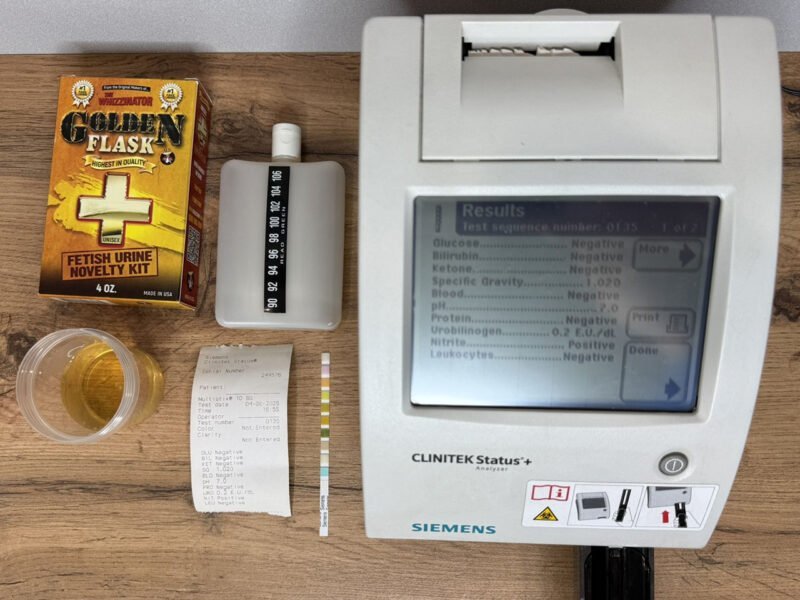
The Golden Flask is a synthetic urine product from the creators of the well-known Whizzinator brand. It offers a premixed solution and is designed for convenience and portability, though it has a few drawbacks in terms of design and heating components.
Key features include:
- A flip-up spout cap already attached for easy use
- Enough urine for two uses
- An integrated temperature strip for monitoring warmth
- Two-year shelf life
However, there are some limitations:
- The urine has a pale color, which may make it appear overly diluted in some cases
- Comes with a low-quality heating pad sourced from China, which may not maintain temperature reliably
- Only one heating pad is included, reducing consistency over time
- The bottle is large and bulky, making it difficult to conceal discreetly during a test
Lab Test Results
In terms of chemical composition, the Golden Flask performs reasonably well. All parameters fell within the normal range, indicating that the urine is well-formulated.
One notable observation was a slightly higher specific gravity compared to the Incognito Belt sample—still within acceptable limits, but edging closer to the upper end of what’s considered natural for human urine.
| Analyte | Result |
|---|---|
| Specific Gravity | 1.020 |
| pH | 7.0 |
| Urobilinogen | 0.2 E.U./dL |
Overall, while the urine quality itself is sufficient to pass lab testing, the physical design and heating reliability of the Golden Flask could be improved for ease of use and discretion.
Synthetix 5
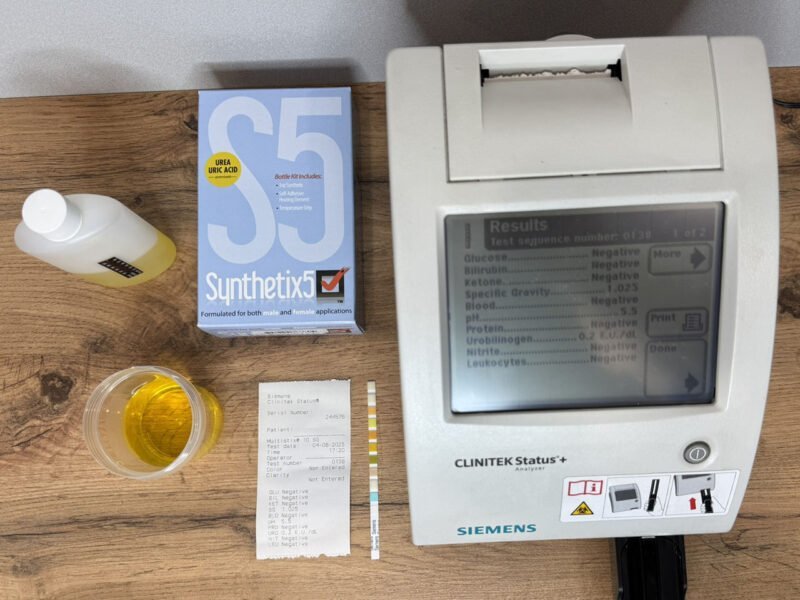
Synthetix 5 is a budget-friendly, pre-mixed synthetic urine solution aimed at users who need a simple and affordable option. It comes ready to use and includes basic heating tools and packaging designed for practical application.
Key features include:
- Flip-up spout cap for quick and easy one-handed use
- Enough urine for two uses, making it economical
- Flat bottle design for easier concealment under clothing
- Adhesive-backed heat pad for easy attachment—no rubber bands needed
- Realistic urine color that visually matches natural urine
- Long-lasting heat pad – maintains warmth for 6–8 hours
However, some issues were noted:
- Uses a standard heat pad, which may overheat the sample or cause skin burns
- Heat pad is too large, which can affect the accuracy of temperature readings
- Only one heat pad included, limiting reuse unless additional pads are purchased
- Temperature strip malfunctioned during testing – inaccurate readings were observed when cross-checked with a digital thermometer
- Heat pad may reach up to 165°F, which risks damaging the urine composition
- Temperature indicator was faded, making it difficult to read clearly
- No stealth accessories included, making it less suitable for users who need discreet transport options
Lab Test Results
In lab testing, all parameters fell within normal ranges, indicating a solid chemical formulation. However, the specific gravity measured near the upper limit (1.030). While still within acceptable boundaries, this could raise suspicion in a lab setting if combined with other borderline factors.
| Analyte | Result |
|---|---|
| Specific Gravity | 1.023 |
| pH | 5.5 |
| Urobilinogen | 0.2 E.U./dL |
Additionally, all indicators tested negative, which doesn’t necessarily flag the sample as synthetic, but also lacks the trace biological markers—such as nitrites or urobilinogen—that are typically found in natural urine.
This may make the sample appear slightly too “clean” or controlled to experienced lab technicians.
Synthetix 5 is a functional and affordable choice, but best suited for lower-risk situations due to its borderline specific gravity and lack of trace elements that add realism.
X-Stream
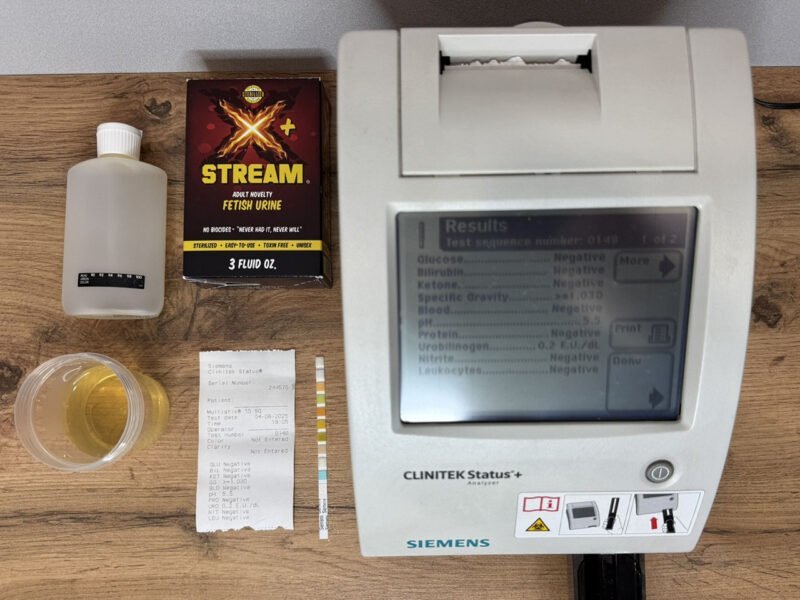
X-Stream is a low-cost, pre-mixed synthetic urine solution designed for users who need a simple and fast option. It offers basic features and is suitable for those seeking a one-time solution without spending too much.
Key features include:
- Flip-up spout cap for quick and stress-free pouring
- Affordable price – accessible for users on a budget
- Two-year shelf life – long-term storage before use
- Temperature strip included to monitor sample warmth
- Unisex formula – appropriate for all users
However, there are multiple limitations:
- No built-in concealment tools, making discreet transport difficult
- Comes with a regular heat pad, which may overheat the sample or cause burns
- No adhesive on the heat pad – requires a rubber band to secure, which may be unreliable
- Single-use only – cannot be stored or reused once opened
- Temperature strip showed inconsistency during testing – may lead to incorrect judgments about sample readiness
- Rubber band heating attachment is less secure and prone to falling off during concealment
Lab Test Results
The X-Stream sample failed to meet all lab validity criteria. While most parameters appeared normal, the specific gravity was measured above 1.030, which is outside the acceptable range for natural urine. This is a critical failure point and would likely cause the sample to be flagged during laboratory testing.
Although the urine color and appearance were reasonable, the elevated specific gravity makes X-Stream unsuitable for passing lab-based validity tests, especially those conducted with professional-grade analyzers.
| Analyte | Result |
|---|---|
| Specific Gravity | >= 1.030 |
| pH | 5.5 |
| Urobilinogen | 0.2 E.U./dL |
X-Stream may serve as a very basic option for low-stakes use, but it falls short in quality and reliability for more serious or supervised testing situations.
Agent-X
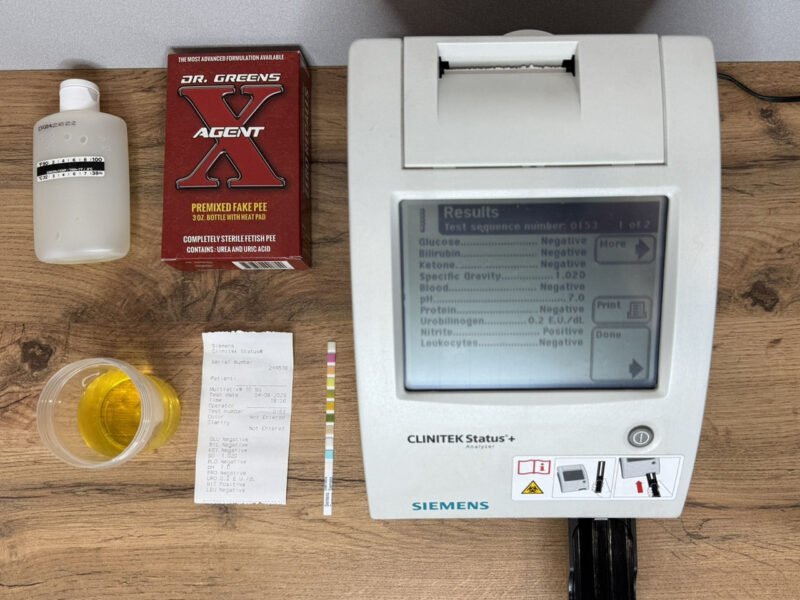
Agent-X is a pre-mixed synthetic urine product aimed at casual or low-stakes users looking for a simple and discreet solution. It comes with a user-friendly design and includes the basic essentials needed for sample delivery.
Key features include:
- Flip-up spout cap for quick, one-handed operation
- Enough urine for two uses, making it a cost-effective choice
- Flat bottle shape for easier concealment under clothing
- Temperature strip included to check readiness before submission
- Unisex formula – suitable for both male and female users
However, the product has some notable limitations:
- Pale urine color, which may appear overly diluted and arouse suspicion
- No included concealment system, such as a belt or wrap, making stealth use more difficult
- Comes with a standard heat pad that can overheat the sample or cause skin burns
- Heat pad can reach up to 158°F, which is well above the ideal range
- No adhesive backing on the heat pad – must be secured with a rubber band, which may slip
- Only one heat pad is included, making it impractical for multiple uses without extra supplies
- The temperature strip is inaccurate, which can lead to misjudging when the sample is ready
Lab Test Results
Agent-X performed well in laboratory testing. All parameters were within normal human urine ranges, and importantly, the sample included trace amounts of nitrites, a positive biological marker that contributes to the appearance of real urine.
| Analyte | Result |
|---|---|
| Specific Gravity | 1.020 |
| pH | 7.0 |
| Urobilinogen | 0.2 E.U./dL |
Despite some shortcomings in design and heating, the urine formulation itself is solid and would likely pass standard lab validity checks.
Ultimate Gold
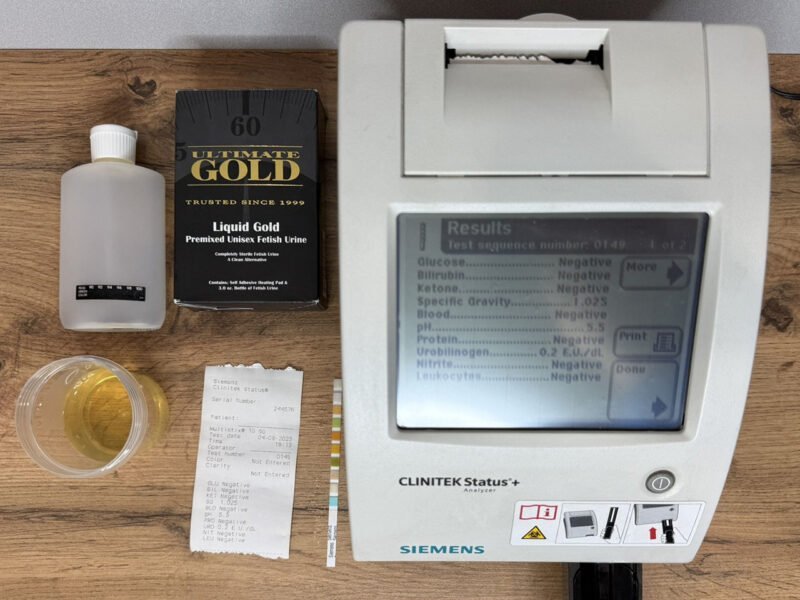
Ultimate Gold offers a pre-mixed synthetic urine solution with a focus on ease of use and visual realism. It’s designed for those who need a quick option that looks convincing and is simple to operate.
Key features include:
- Flip-up spout cap for ease of use and reduced spill risk
- Two-use volume – enough synthetic urine for multiple attempts
- Flat bottle design – easier to hide under clothing
- Adhesive-backed heat pad – attaches without the need for rubber bands
However, it comes with several downsides:
- No concealment system included, which makes stealthy use more challenging
- Only one heat pad is provided, limiting reuse
- The heat pad can reach up to 165°F, which may overheat the sample and cause burns
- Not suitable for last-minute use – may take up to an hour to warm if not preheated in a microwave
- Not safe for direct skin contact due to high heat levels
Lab Test Results
Ultimate Gold showed a chemically sound formulation during testing. All ten urinalysis parameters were within normal range, and the specific gravity was close to the upper limit, though still technically acceptable. However, like Synthetix 5, all markers were negative, meaning the sample lacks subtle biological indicators like nitrites or urobilinogen, which are often present in natural urine.
| Analyte | Result |
|---|---|
| Specific Gravity | 1.025 |
| pH | 5.5 |
| Urobilinogen | 0.2 E.U./dL |
While this doesn’t automatically flag the sample as synthetic, it could appear too clean or artificial in a high-scrutiny testing environment.
Pure Gold
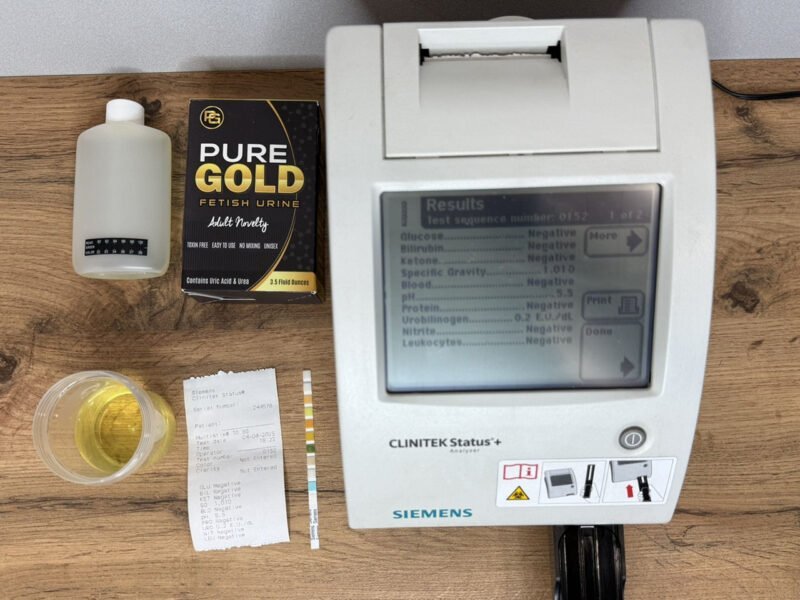
Pure Gold is a pre-mixed synthetic urine product designed for users who want a reheatable, multi-use option at an affordable price point. It comes with basic features for heating and monitoring temperature, but lacks any stealth or concealment tools.
Key features include:
- Enough urine for two uses, making it economical if stored and reheated properly
- Adhesive-backed heat pad for easy and secure attachment
- Temperature strip included for monitoring sample warmth
- Reheatable formula – can be used again within 24–48 hours after opening
However, it has several drawbacks:
- No built-in concealment system, making discreet transport more difficult
- Only one heat pad included, which limits the practicality of two-use volume
- Heat pad reaches up to 160°F, which can overheat the urine and lead to failed temperature checks
- Risk of skin burns if the pad is worn directly against the body
Lab Test Results
Pure Gold passed the lab validity checks with all 10 parameters within normal range. However, like some other lower-end products, all markers tested negative—including the absence of trace elements like nitrites or urobilinogen.
While this doesn’t confirm the sample as synthetic, it lacks the subtle biological variation typically seen in natural urine, which could make it appear suspicious under close examination.
Conclusion
Incognito Belt stands out as the clear winner due to its high urine quality and user-friendly, all-inclusive design. It requires minimal setup and provides consistent heating, concealment, and ease of use—making it the most reliable solution overall.
- All you need to pass your test in one kit.
- It will pass specimen validity tests.
- Labs cannot tell that it’s synthetic.
- Invisible under clothes.
- Maintains perfect temperature.
- All you need to pass your test in one kit.
- It will pass specimen validity tests.
- Labs cannot tell that it’s synthetic.
- Invisible under clothes.
- Maintains perfect temperature.
- All you need to pass your test in one kit.
- It will pass specimen validity tests.
- Labs cannot tell that it’s synthetic.
- Invisible under clothes.
- Maintains perfect temperature.
Other excellent options include Quick Luck, which comes ready to use with premium heating pads, and Sub Solution, which is ideal for those who are comfortable preparing powdered urine and want extended shelf life and flexibility.
The top underperformer in our test was X-Stream, which failed the lab validity check due to a specific gravity reading above 1.030—placing it outside the acceptable range and making it unsuitable for use in professional lab settings.
What is Fake Urine and How Does It Work?
Fake urine — also called synthetic urine — is a laboratory-formulated liquid built to match the chemical and physical profile of human urine, including water, urea, uric acid, creatinine, and dissolved mineral salts. It works by satisfying the specific checks a collector and a laboratory actually perform on a specimen: temperature, visual appearance, creatinine, specific gravity, pH, and oxidant screens.
It is not a masking agent, and it does not change body chemistry. A synthetic sample is drug-free by default, because no drug metabolites were ever introduced into it.
What Fake Urine Is Made Of
Human urine is roughly 95% water. The remaining 5% is dissolved waste — mainly urea (a byproduct of protein metabolism), uric acid, creatinine (a breakdown product of creatine phosphate in muscle), and inorganic salts such as sodium, potassium, chloride, and phosphate.
A quality synthetic formula reproduces that matrix rather than imitating the color alone.
| Ingredient | Purpose in the formula | Why the lab cares |
|---|---|---|
| Water | Base of the solution | Determines volume and dilution |
| Urea | Primary nitrogen waste product | A natural urine ingredient labs may measure |
| Uric acid | Secondary organic acid | Also contributes to realistic odor |
| Creatinine | Concentration marker | Tested on every primary specimen in regulated testing |
| Mineral salts | Density and ionic content | Drives specific gravity, conductivity, and osmolality |
| Buffers | Hold pH steady during storage | Keeps pH inside the 4.5–8.0 biological window |
| Coloring agents | Visual match | Supports the collector’s visual inspection |
The Two Formats
Synthetic urine is sold in two formats, and the difference is mostly about storage and preparation:
- Premixed liquid (Incognito Belt, Quick Luck, Quick Fix, Golden Flask): ready to use immediately, with no mixing and no clean water required. This format is better suited to tests that can happen on short notice.
- Powdered urine (Sub Solution, TestClear): stays dry until it is mixed with clean bottled water. This gives longer storage flexibility, but it adds 5–10 minutes of preparation and one more item to carry.
How It Behaves During a Test
Three things have to align at the same time for a synthetic sample to look ordinary:
- Chemistry — creatinine, specific gravity, and pH inside normal human ranges.
- Temperature — 90°F to 100°F when the collector checks it.
- Appearance — normal color, normal foaming, no particles or sediment.
Chemistry is handled by the manufacturer. Temperature and appearance are handled by the user, which is why heating hardware and bottle design can matter as much as the formula itself.
Summary
Fake urine is a chemically engineered substitute, not a cleansing product. Its performance depends on how completely the formula reproduces real urine markers, and on whether the sample is still inside the required temperature range when it is handed over.
How to Pick the Best Synthetic Urine for Lab Testing
Selecting an effective synthetic urine requires an understanding of the validity parameters used by diagnostic laboratories. When a sample is collected, it undergoes an immediate visual and thermal inspection, followed by a chemical analysis. A product that fails to meet the biological standards of a healthy human adult will be flagged as “invalid” or “adulterated.”
To ensure a sample is chemically indistinguishable from human urine, the following scientific criteria must be met:
- Presence of Urea and Uric Acid: Diagnostic labs test for the presence of these specific organic compounds. Synthetic formulas that rely solely on coloring agents without including synthesized urea and uric acid will fail the initial composition screen.
- Creatinine Levels: Creatinine is the primary marker used to determine urine concentration. If a sample lacks creatinine, or if the levels are statistically too low, the lab will report the sample as “diluted” or “substituted.” An effective synthetic solution must contain creatinine levels within the normal biological range of 20 to 350 mg/dL.
- Specific Gravity and pH Balance: Specific gravity measures the density of the urine compared to pure water. Normal human urine typically ranges between 1.005 and 1.030. Similarly, the pH level must fall within the biological spectrum, generally between 4.6 and 8.0. If a synthetic product is too acidic or too alkaline, or if its density matches that of water (1.000), it will be rejected.
- Absence of Biocides: Some lower-quality synthetic urines use biocides (preservatives) to extend shelf life. However, modern laboratory technology can detect the presence of these artificial preservatives. It is critical to select a formula that is “biocide-free” or uses natural preservation methods to avoid detection.
- Temperature Regulation: The most common reason for sample rejection is incorrect temperature. Upon collection, fresh human urine leaves the body at internal body temperature. Laboratories require the sample to be between 90°F and 100°F (32°C to 38°C) within four minutes of collection. A viable synthetic kit must include a reliable heating element (such as a heating pad or heat activator powder) and a temperature strip to ensure the fluid is within this precise thermal window before submission.
Can Labs and Panel Tests Detect Fake Urine? (LabCorp, Quest, Concentra)
Yes, laboratories can detect fake urine – but only when the ordered test includes specimen validity testing (SVT), and detection happens in layers rather than through a single test labeled “synthetic urine.” A basic drug-only screen may miss a substituted sample entirely, while a certified lab workflow has several independent ways to flag one.
The distinction that matters is this: a drug test asks whether drug compounds or metabolites are present. A validity test asks whether the liquid behaves like real human urine. A sample can be negative for drugs and still be reported as dilute, substituted, adulterated, invalid, or rejected.
What Gets Checked, and In What Order
In U.S. DOT-regulated urine testing, the sequence is defined by federal rule rather than by lab preference.
| Stage | What happens | Reference |
|---|---|---|
| Collection site | ID check, hand washing, controlled bathroom, minimum 45 mL specimen | 49 CFR 40.63 |
| Temperature | Checked no later than four minutes after handover; range 32–38°C / 90–100°F | 49 CFR 40.65 |
| Visual inspection | Unusual color, foreign material, excessive foaming, bleach-like odor | 49 CFR 40.65 |
| Routine lab validity testing | Creatinine and pH on every primary specimen; one or more oxidizing-adulterant tests; specific gravity when creatinine is below 20 mg/dL | 49 CFR 40.87 |
| Conditional testing | Nitrite, glutaraldehyde, chromium(VI), halogens, and other targeted checks when something looks wrong | 49 CFR 40.87 |
| Result category | Negative, dilute, positive, substituted, adulterated, invalid, or rejected | 49 CFR 40.88 |
Two numeric thresholds are worth knowing, because they explain why creatinine and specific gravity carry so much weight:
- A specimen is reported dilute when creatinine is at least 2 mg/dL but below 20 mg/dL, and specific gravity is above 1.0010 but below 1.0030.
- A specimen is reported substituted when creatinine is below 2 mg/dL and specific gravity is extreme on both initial and confirmatory testing from separate aliquots.
Substitution is the category most relevant to synthetic urine. This is why a formula without measurable creatinine may fail regardless of how convincing its color is.
Does LabCorp Detect Fake Urine?
Labcorp does not need a test labeled “synthetic urine” to catch many fake samples. Its specimen validity testing is designed to detect substitution, adulteration, and dilution.
According to Labcorp’s own SVT documentation:
- The SVT panel includes creatinine at minimum.
- If creatinine falls below 20 mg/dL, the panel reflexes to a specific gravity test.
- Creatinine and specific gravity together are used to identify dilute, substituted, or invalid specimens.
- pH and nitrite can be added to a panel.
- SVT is performed at the same time as the initial drug screens, not before them (Labcorp, Specimen validity testing FAQ).
That said, not every Labcorp urine test automatically includes every possible validity check. The panel depends on what the employer or program ordered and whether the test is DOT-regulated.
Does Quest Diagnostics Detect Fake Urine?
Quest Diagnostics is one of the largest certified workplace testing laboratories in the United States, and it operates under the same regulatory framework as other certified labs.
For DOT-regulated collections, validity testing is not optional at any certified laboratory. Creatinine, pH, and at least one oxidizing-adulterant test are required on every primary specimen, with specific gravity added when creatinine is low.
For non-DOT employer panels, whether validity testing is attached depends on the panel the employer purchased. A drug-only screen focuses on drug presence, while a panel that includes SVT also asks whether the specimen is consistent with human urine.
Does Concentra Detect Fake Urine?
Concentra works differently from a reference laboratory. It is widely used as an occupational health provider, so a Concentra clinic may collect the specimen, run a rapid point-of-care test, or forward the sample to a laboratory that performs the actual analysis.
The practical answer depends on which service is being used:
- DOT urine test: yes — required collection checks plus mandatory lab validity testing.
- Lab-based non-DOT test with SVT ordered: yes — the lab can flag substituted, diluted, adulterated, or invalid urine.
- Rapid point-of-care cup only: possibly, though detection is limited to whatever adulteration pads the cup includes.
- Drug screen without SVT: less likely, because the test focuses mainly on drug presence.
At the clinic level, the realistic checks are the front-line ones: specimen volume, temperature within the four-minute window, unusual color or odor, foam, particles, and chain-of-custody problems.
Do 5-Panel and 10-Panel Tests Detect Fake Urine?
This is a common point of confusion. The “panel” number describes how many drug classes are screened, not how many validity checks are performed.
A 10-panel test screens for more substances than a 5-panel test, but neither number indicates whether creatinine, specific gravity, pH, or oxidants are being measured. Validity testing is a separate line item on the order.
In practical terms, a 5-panel test with full specimen validity testing scrutinizes a sample more closely than a 10-panel test without it.
What Separates a Strong Formula From a Weak One
The lab analysis in this review illustrates the point directly. Most products tested inside normal human ranges on all ten parameters, and several — including the Incognito Belt, Quick Luck, Sub Solution, Quick Fix, TestClear, and Agent-X — carried trace biological markers that add realism.
X-Stream was the exception. Its specific gravity measured above 1.030, outside the accepted range for natural urine. A single value like that is enough to trigger a validity failure in a laboratory setting, regardless of what the drug screen shows.
Summary
Fake urine can be detected, and the most common detection points are temperature, creatinine, specific gravity, pH, and oxidizing adulterants. Detection is not automatic — it depends on whether specimen validity testing was ordered — but the products most likely to withstand scrutiny are those whose full chemical profile falls inside normal human ranges, not just their color.
Where to Buy Fake Urine, Age Requirements, and Cost
Fake urine is sold in the United States as a laboratory calibration and novelty product, primarily through manufacturer-operated online stores and smoke shops. Most reputable retailers restrict purchases to customers 18 or older, and prices generally run from roughly $30 for a basic premixed bottle to $135 for a complete belt kit.
Where to Buy It
The most consequential buying decision is the source, not the price. Counterfeit versions of popular brands circulate widely on general marketplaces, and a counterfeit formula is one of the most avoidable causes of a failed validity check.
| Product | Official source | Manufacturer |
|---|---|---|
| Incognito Belt | Test Negative website | Clear Choice |
| Quick Luck | Test Negative website | Clear Choice |
| Sub Solution | Test Negative website | Clear Choice |
| TestClear Powdered Urine | TestClear official website | TestClear |
| Monkey Whizz | Serious Monkey Business website | Serious Monkey Business |
A few practical notes on sourcing:
- Avoid Amazon and eBay listings. Counterfeit Sub Solution and Quick Luck products appear regularly on these platforms, and a fake product may not contain the ingredients its label claims.
- Official stores typically offer next-day delivery and ship in discreet, unbranded packaging.
- Smoke shops and head shops stock budget premixed brands, but stock rotation is inconsistent, so the expiration date is worth checking on the shelf.
Age Requirements and Legal Status
Retailers generally treat synthetic urine as an adult product and require buyers to be at least 18. Some sellers apply age verification at checkout.
Legality is more nuanced than the age rule. Synthetic urine itself is legal to manufacture and sell as a calibration fluid, but several U.S. states have passed laws restricting its sale or possession with intent to defraud a drug test. Definitions and penalties vary by state, so local statutes are worth reviewing before purchase.
What It Costs
Price tracks two things: formula quality and included hardware.
| Product | Price | What the price includes |
|---|---|---|
| Incognito Belt | $135 | Premixed urine, bladder bag on a belt, two heat pads, delivery tube with clips, temperature strip, two uses |
| Quick Luck | $115 | Premixed urine, two premium heat pads, heat activator powder, flip-up spout cap, two uses |
| Sub Solution | $95 | Powdered urine, heat activator powder, mixing vial, temperature strip, two uses |
| Budget premixed bottles | Lowest tier | Bottle, one heat pad, temperature strip; no concealment system |
The per-use math is what matters most. A $135 belt kit that covers two uses and includes concealment and reliable heating may cost less in practice than a budget bottle that requires separately purchased heat pads and a stash belt.
Summary
Buy from the manufacturer’s official store to avoid counterfeits, expect an 18+ age requirement, and budget roughly $30 to $135 depending on whether the kit includes heating and concealment hardware. State law on intended use varies, so local rules are worth checking.
Shelf Life: Does Fake Urine Expire or Go Bad?
Yes, fake urine has a shelf life. Most quality kits are rated for approximately two years unopened when stored at room temperature, and the products in this review – including the Incognito Belt, Quick Luck, Sub Solution, Quick Fix, Golden Flask, and X-Stream -carry two-year storage windows.
It does not spoil the way food does, but the formula can degrade. Buffers drift, salts can precipitate, and once a container is opened, microbial growth becomes possible in a solution built to be biologically realistic.
Shelf Life by Format
| Format | Unopened shelf life | After opening or mixing |
|---|---|---|
| Powdered urine (Sub Solution, TestClear) | Up to 2 years, with the most storage flexibility | Use promptly once mixed with water |
| Premixed liquid (Incognito Belt, Quick Luck, Quick Fix, Golden Flask) | Up to 2 years sealed | Generally 24–48 hours if kept sealed and refrigerated |
| Budget premixed single-use bottles | Up to 2 years sealed | Often single-use; not designed for storage after opening |
Powdered formulas hold the storage advantage for a straightforward reason: the chemistry stays dry and inert until water is added. Nothing can separate, oxidize, or grow in a sealed powder.
How to Store It Correctly
- Keep it at stable room temperature. Repeated heat cycles are harder on a premixed formula than simple aging.
- Keep it out of direct sunlight. Light exposure may affect coloring agents over time.
- Leave the seal intact until use. Quality formulas are biocide-free, which improves lab performance but means the sealed container is doing the preservation work.
- Freezing and reheating is acceptable for some products. Quick Luck, for example, can be frozen and reheated multiple times. That said, the Incognito Belt should not be microwaved, because its bladder bag is not designed for it.
Signs a Sample Should Not Be Used
Replace a sample if it shows:
- visible cloudiness or haze in a formula that was previously clear;
- particles, flakes, or sediment at the bottom;
- a noticeably darker, paler, or off-tone color compared with when it was purchased;
- a bulging or leaking container;
- a printed expiration date that has passed.
Any of these may indicate the chemistry has shifted. Since specific gravity and pH sit at the center of validity testing, a degraded formula carries real risk of falling outside normal ranges.
Summary
Expect roughly two years of unopened shelf life, with powdered formats offering the most flexibility. Check the expiration date well before test day rather than on the morning of, and treat cloudiness, sediment, or color change as reasons to replace the sample.
How to Use Fake Urine
Using fake urine correctly comes down to three things: preparing the sample well in advance, verifying that its temperature reads between 90°F and 100°F before you arrive, and being able to deliver it without fumbling. The Incognito Belt illustrates the process clearly, because it combines the urine, the heating, and the concealment into one system.
The steps below follow the manufacturer’s instructions for the Incognito Belt, the top performer in this review.
Step-by-Step: Incognito Belt
- Open the heat pad and remove the adhesive backing. The pads in this kit are formulated specifically for synthetic urine, so they produce the required amount of heat without the overheating risk associated with standard hand or toe warmers.
- Shake the heat pad a few times to activate it. These pads are activated by contact with air.
- Stick the heat pad to the bladder bag, positioning it between the belt and the urine pouch.
- Wrap the belt around your waist, under all clothing. Position it so the temperature strip touches your skin and the drain tube points downward.
- Close the white clips. The kit uses two clips for redundancy, so the contents cannot spill.
- Cut the end of the tube off. This opens the delivery path, and it should be done before you leave rather than at the testing site.
- Wear loose clothing. The belt has a low profile and fits waists up to 48 inches, but loose outer layers add margin.
- Unfasten the white clip to release the contents when you are ready. The clip operates quietly, and the tube produces a natural stream sound.
Timing Matters More Than Technique
The most common mistake is starting too late. Body heat needs roughly 30 to 60 minutes to bring a sample up to temperature, and heat pads need time to reach full output.
The practical approach is to put the belt on in the morning on the day of the test. Once the pad is activated and the bag rests against your body, the sample stays inside range for up to eight hours, which removes time pressure almost entirely.
First-Time Checklist
- Read the instructions before test day. The Incognito Belt booklet includes a support phone number if anything is unclear.
- Do a dry run at home. Wearing the belt once beforehand removes most of the awkwardness of the real thing.
- Check the expiration date when the kit arrives, not the night before.
- Verify the temperature strip before entering the building, rather than in the collection room.
- Empty your pockets in advance. Collectors commonly ask you to do this, and a powder vial or spare heat pad found in a pocket may escalate the collection.
- Do not microwave the Incognito Belt bladder bag. Bottle-based kits can be microwaved in short bursts; this one cannot.
Bottle-Based Kits Follow the Same Logic
For flat-bottle products such as Quick Luck, Quick Fix, or Sub Solution, the sequence is similar with two differences:
- Powdered products (Sub Solution, TestClear) need 5–10 minutes of preparation and clean bottled water rather than tap water, which can shift the chemical balance.
- The bottle must be concealed separately, since these kits do not include a built-in carrying system.
Summary
Prepare early, keep the sample against your body, confirm the temperature strip reads 90–100°F before going in, and practice the delivery once beforehand. An all-in-one belt removes most of the steps where things typically go wrong.
How to Heat and Keep Fake Urine Warm
Fake urine should be between 90°F and 100°F when it is handed over, and temperature is the most common reason samples are rejected. Fresh human urine leaves the body between roughly 97°F and 100°F, and collectors are required to check the sample within four minutes of receiving it.
Once a sample is removed from body contact, it cools quickly, typically dropping below 90°F in about four minutes. That short window is why the sample should be poured out promptly, and why the heating method needs to be reliable rather than clever.
The Four Practical Methods
| Method | Time to reach temperature | How long it holds | Main risk |
|---|---|---|---|
| Body heat | 30–60 minutes for a 2 oz bottle | As long as it stays against skin | Slow; unreliable if contact is lost |
| Dedicated heat pads | Activates within minutes | 8–10 hours | Very low with purpose-built pads |
| Heat activator powder | Seconds | Not a holding method | Overheating; an extra item to conceal |
| Microwave preheat | 10-second bursts | Not a holding method | Easy to overshoot 100°F |
Body Heat
The most common method is simply keeping the sample against the body — in the crotch area, strapped to a leg, or in a bra.
Roughly 30 minutes is needed to bring 2 ounces of liquid up to body temperature, and the sample stays warm only while it remains in skin contact. Fitted underwear with loose outer clothing helps maintain that contact without making the bottle visible.
Body heat works, but it is slow and depends entirely on positioning. It is best used as a holding method after the sample is already warm, rather than as the primary heat source.
Heat Pads
Heat pads designed specifically for synthetic urine are the most reliable option for most people. They contain chemical elements that activate on contact with air and hold temperature for 8 to 10 hours depending on the kit.
Two features separate good pads from poor ones:
- Adhesive backing. A pad that sticks to the bottle stays where it belongs. Rubber-band attachment, used by several budget kits, can slip during movement.
- Calibrated output. Purpose-built pads produce only the heat a urine sample needs.
Regular hand warmers are a poor substitute. They are engineered for cold-weather use and can reach 100°F to 180°F (37°C to 82°C) — well above what a sample needs, and hot enough to risk skin burns. Several budget kits in this review shipped with pads reaching 158°F to 165°F, which may damage the sample composition.
Heat Activator Powder
Heat activator powder is a chemical additive that raises the sample temperature within seconds. It is included with premium kits such as Quick Luck and Sub Solution.
If you use it, the dosing sequence matters:
- Tap the vial against a hard surface to break up any clumps.
- Add about one-third of the powder to the container.
- If the temperature strip already reads between 88°F and 92°F, use only one-quarter.
- Shake gently for under 20 seconds to dissolve the granules.
- Read the strip and add small amounts as needed, targeting 94°F to 100°F.
- Do not let the temperature exceed 102°F.
That said, powder is best used before you arrive, not inside the collection room. Under time pressure, with a collector waiting, measuring an unmarked powder into a bottle is a difficult sequence to execute well. Heat pads are the lower-stress choice for the testing environment itself.
Microwave Preheating
A microwave is useful when a sample is refrigerated, frozen, or needed on very short notice.
- Heat for 10 seconds on full power.
- Shake gently and read the temperature strip.
- Repeat in 10-second increments until the reading approaches 100°F.
- If the strip reading disappears, the sample is too hot — let it cool before use.
- A frozen sample generally thaws in about two minutes.
After preheating, attach an activated heat pad and place the container against your body. The pad then maintains what the microwave established.
Checking the Temperature
Temperature strips attached to the bottle or bladder bag are the practical tool for this, rather than thermometers.
One detail is easy to miss: many strips only read up to 90°F. Choose a strip that reads to 100°F, since the entire acceptable range needs to be visible. Quality kits include accurate strips, while several budget products in this review produced inconsistent readings when cross-checked against a digital thermometer.
Electric urine warmers are no longer a practical option for most people. The main device on the market, the Urinator, has been discontinued, and third-party listings carry authenticity risk at a high price.
Summary
Target 90–100°F at handover, use purpose-built adhesive heat pads as the primary method, and rely on body heat to hold that temperature. Reserve heat activator powder and microwave bursts for warming the sample before you arrive, and verify the reading on a strip that measures up to 100°F.
How to Hide Fake Urine
Concealing a synthetic urine sample is mostly a question of bottle shape and body placement, and the three practical options are the crotch area, a leg stash belt, and a waist belt with an integrated bladder bag. The last of these is the most reliable, because the sample is carried in a flat pouch that is invisible under normal clothing rather than as a rigid bottle that has to be hidden.
Discreet carry matters in plenty of ordinary contexts. Synthetic urine is sold as a calibration and novelty fluid, and it is widely used in adult and fetish play, in prank products, and by technicians transporting calibration fluid – situations where concealment is about privacy rather than deception.
Option 1: The Crotch Area
The waistband and crotch region is the most common placement, because it combines concealment with body heat.
- Works best with flat bottles, which are now the industry standard for exactly this reason.
- Fitted underwear holds the bottle in place, while loose outer clothing hides the outline.
- The sample stays warm as long as it remains in skin contact.
- A bottle with a built-in temperature strip lets you verify the reading without unpacking anything.
The limitation is stability. A rigid bottle can shift when you sit, walk, or climb stairs, and a heat pad attached with a rubber band rather than adhesive may work loose.
Option 2: A Leg Stash Belt
A stash belt worn on the thigh or calf is the next step up in security.
- Holds the container firmly against the leg, which reduces shifting.
- Sports wrapping tape achieves a similar result at lower cost.
- Handles bulkier or round bottles better than the crotch position.
- Specialized stealth underwear serves the same function with more room.
The tradeoff is warmth and access. A leg position receives less consistent body heat than the crotch area, and retrieving the container takes longer.
Option 3: The Incognito Belt — The Best Concealment Option
The Incognito Belt is the strongest option available, because concealment is designed into the product rather than added afterward.
Why it outperforms improvised methods:
- The urine sits in a flat bladder bag on an adjustable Velcro belt, worn at the waist under all clothing. There is no rigid bottle outline.
- The low-profile design is invisible under clothes and fits waists up to 48 inches.
- The bag holds itself against the body, so body heat maintains temperature without additional positioning.
- A temperature strip sits on the bag against your skin, readable at any point.
- A delivery tube with two clips allows the sample to be released by unfastening a clip. Nothing has to be retrieved, unscrewed, or poured.
- The clip operates without extra noise, and the tube produces a realistic stream sound.
- It is suitable for both men and women.
Because everything is integrated, there is no separate bottle to position, no powder vial to hide, and no rubber-banded heat pad that can slip during movement.
Concealment Comparison
| Method | Visibility under clothing | Temperature stability | Ease of delivery | Extra gear needed |
|---|---|---|---|---|
| Crotch area | Good with a flat bottle and loose clothing | Good — direct skin contact | Requires retrieving and pouring | Flat bottle, heat pad |
| Leg stash belt | Good | Moderate | Slower retrieval | Stash belt or wrap tape |
| Bra | Moderate — more noticeable | Good | Awkward retrieval | Adhesive tape |
| Incognito Belt | Invisible — flat bag, no bottle outline | Very good — bag rests against the body | Unclip and release | None; fully integrated |
What Causes Concealment to Fail
- Bulky or round bottles. The Golden Flask and TestClear bottles are noticeably harder to hide than flat designs.
- Rubber-band heat pad attachment. Pads without adhesive backing can slip out of position.
- Loose accessories in pockets. Collectors commonly ask you to empty your pockets, and a powder vial or spare pad is more conspicuous than the sample itself.
- Clothing that is too tight. Fitted trousers reveal outlines that loose clothing hides.
Summary
Flat bottles carried in the crotch area or on a leg belt work, but they depend on positioning and can shift. A belt with an integrated bladder bag, such as the Incognito Belt, removes the outline problem entirely and keeps the sample warm and accessible without any additional gear.
How to Make Fake Urine at Home
Making usable fake urine at home is not realistically possible. Homemade recipes — water with salt, yellow food coloring, apple juice, or similar mixes — can imitate the color of urine, but they cannot reproduce the specific chemical markers that specimen validity testing measures, and those markers are what determines whether a sample is accepted.
The obstacle is not effort or secrecy. It is that the required ingredients are laboratory reagents and the required accuracy is analytical.
What a Lab Measures vs. What a Home Recipe Provides
| What the lab checks | Required value | What a home mixture supplies |
|---|---|---|
| Creatinine | 20–300 mg/dL | None — not present in water, salt, juice, or dye |
| Specific gravity | 1.005–1.030 | Unpredictable; salt water is easy to push out of range |
| pH | 4.5–8.0 | Uncontrolled; drifts without buffers |
| Urea and uric acid | Present | Absent from household ingredients |
| Oxidants and nitrite | Absent | Depends entirely on what was mixed in |
| Color and foaming | Normal | Color is achievable; foaming behavior is not |
The creatinine row alone settles the question. Under federal rules, a specimen with creatinine below 2 mg/dL and an abnormal specific gravity is reported as substituted. A homemade mixture contains no creatinine at all, so it falls below that threshold by definition, regardless of how convincing it looks in the cup.
Five Reasons DIY Formulas Do Not Work
- The key ingredients are not household items. Creatinine, urea, and uric acid are purchased as laboratory chemicals. They are not sold in grocery or hardware stores.
- The dosing tolerance is narrow. Creatinine has to land inside a 20–300 mg/dL window. Hitting that reliably requires an analytical balance, not kitchen measurement.
- Two parameters have to align at once. Specific gravity and pH interact. Adjusting salt content to correct density shifts the acid-base balance, and correcting pH requires buffers that then affect density. Matching both simultaneously is a calibration task.
- Unpreserved solutions degrade quickly. A homemade mixture is a nutrient-rich liquid sitting at room temperature. Microbial growth can change pH, clarity, and odor within hours, which is why commercial products are prepared under controlled conditions and sealed.
- Physical realism is separate from chemistry. Real urine foams in a characteristic way and has a specific odor profile. Colored salt water does not, and visual inspection at the collection site is one of the first checks performed.
The Cost Argument Also Fails
Sourcing reagent-grade creatinine, urea, and uric acid, plus buffers, a pH meter, a refractometer, and an analytical balance, costs considerably more than a complete commercial kit. The Incognito Belt costs $135 with heating, concealment, and two uses included, and Sub Solution costs $95.
A home setup would cost more, take substantially longer, produce an unverified result, and still provide no temperature control or concealment system.
What Actually Determines Success
The lab analysis in this review found that commercially formulated products from established manufacturers landed inside normal human ranges across all ten urinalysis parameters — and also showed that even a professionally made product can fail on a single value, as X-Stream did with a specific gravity reading above 1.030.
If a manufacturer with 20 years of formulation experience and laboratory quality control can miss a parameter, a kitchen mixture without measurement equipment has no realistic path to matching the full profile.
Summary
Fake urine cannot be made at home in any usable form. The markers labs measure — creatinine, specific gravity, pH, urea, and uric acid — require laboratory reagents and analytical precision, and household substitutes supply none of them. A tested commercial kit is the only practical option.